

Learning How to Play Magic the Gathering: A Beginners Guide

So, you just got into this cool new game called Magic the Gathering. Fantastic! Good on you! I'm here to help teach you some tips and tricks for learning how to play.
Magic can be somewhat of a daunting experience for new players, the game has a high skill floor, but don't you worry, starting with the basics we'll get you playing like a pro in no time.
Without further ado; here is everything you need to know as a Magic the Gathering beginner
The absolute basics
There are a few basics you'll need to know before you can start shuffling up a pile of these cards and start playing. It will help if you know what all of the different types of cards you'll be playing with do and how to play.
First and foremost, let's go over the different parts of a card. Let's take a look at this Fireball as an example:

There are 4 main parts of this card to focus on, those are its:
- Name
- Mana Cost (sometimes referred to as Mana Value)
- Type
- Text Box
The name is located in the top left corner of the card. This one is Fireball. But I'm sure you gathered that one by now.
Fireballs Mana Cost is located in the top right corner of the card. This card has a total mana cost of one Red mana and X colorless mana. We will elaborate on what all that means in a second.
The next part of the card is its Type line. The Type line is where we find out what type of card we're dealing with and it is located where you see the word "Sorcery" and extends all the way left and includes our set symbol (in this case the fancy looking silver circle).
And finally we have the cards text box. That's the box directly below the type line that contains the rest of the information about the card. It is there to tell you what this specific Magic card does.
Right now you might be wondering
"But what does all of that text mean? What the hell is a Sorcery? Why is there algebra in my new card game?"
Let me break some of it down for you.
Card Type
Sorcery. What the hell is that. Well, as we previously established, the type line helps us work out what type of card we're dealing with. In this case, as sorcery.
There are 7 different types of card that you'll encounter on your magic journey that you'll need to know about. In this section, I'll explain what each of them are and what they do.
Each of the different types of card behave in a certain way, but each can always be identified by its card type, located in the centre of the card, below the art.The 7 types of card you'll need to know about are:
Lands
Enchantments
Artifacts
Creatures
Instants
Sorceries
Planeswalkers
Let's break each of those down and explain what those words mean.
Lands

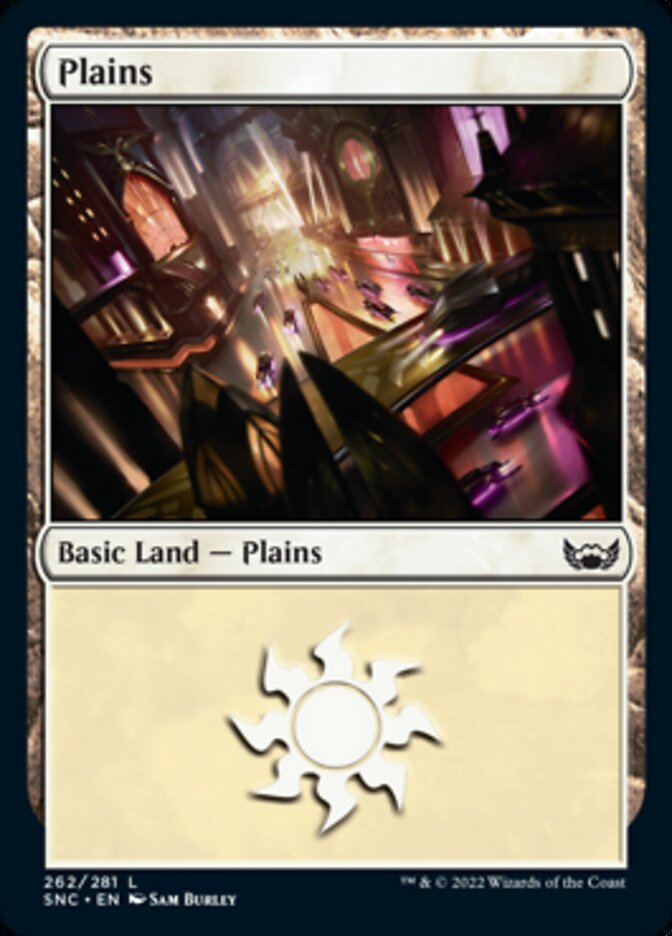

These are lands.
Lands are the bread and butter of Magic because they let you cast all of the other types of cards.
You get to play one of these on each of your turns, they tap and they make you mana. You then use that mana to pay those Mana Costs we talked about earlier.
Play one land a turn, tap it (turn it sideways) for mana, use the mana to cast spells.Easy! Each land you play can be used to make one mana of the color it taps for per turn.
Now the keen eyed among you may have noticed that unlike our friend Fireball there are some other words in the type line of our lands. And 2 of them have nothing written in the text box either. That's okay. Let's cover that now.
In Magic the Gathering there is a limit to the number of each unique card you can have in your deck. Traditionally, you are restricted to a maximum of 4 copies.
So if you wanted to shuffle up some Fireballs, you would be able to put a maximum of 4 cards named Fireball in your deck. This is true for most cards. With the exception of Basic Lands.
Basic Lands make up most of your deck. The Supertype (named because it comes before the type) Basic, gives the lands this special property. There are 5 Basic land types. Those are:
Plains, Islands, Swamps, Mountains and Forests.
Each of those types of Lands also has a little line of text we don't see on Basics very often these days which is:

Nowadays, the focus is usually on the art of the card, as Basic Lands are relatively easy to wrap your head around once you've used them a few times.
But what about that other Land? Steam Vents. It doesn't have the word Basic on it but it is still a Mountain and an Island at the same time.
Yes! Good eye. That is what's known as a non-basic land, or a non-basic for short. Any land that is not a Plains, Island, Swamp, Mountain or Forest by name is a non-basic land. They usually have the added bonus of tapping for two different colors, or having some other advantageous effect. But, because they are not Basic Lands, they must fit that maximum of 4 rule we established earlier. You can have any number of Islands in a deck, but only 4 Steam Vents.
You may have any number of Basic Lands in a deck. You are limited to 4 copies on any individual non-basic LandNow, onto....
Enchantments

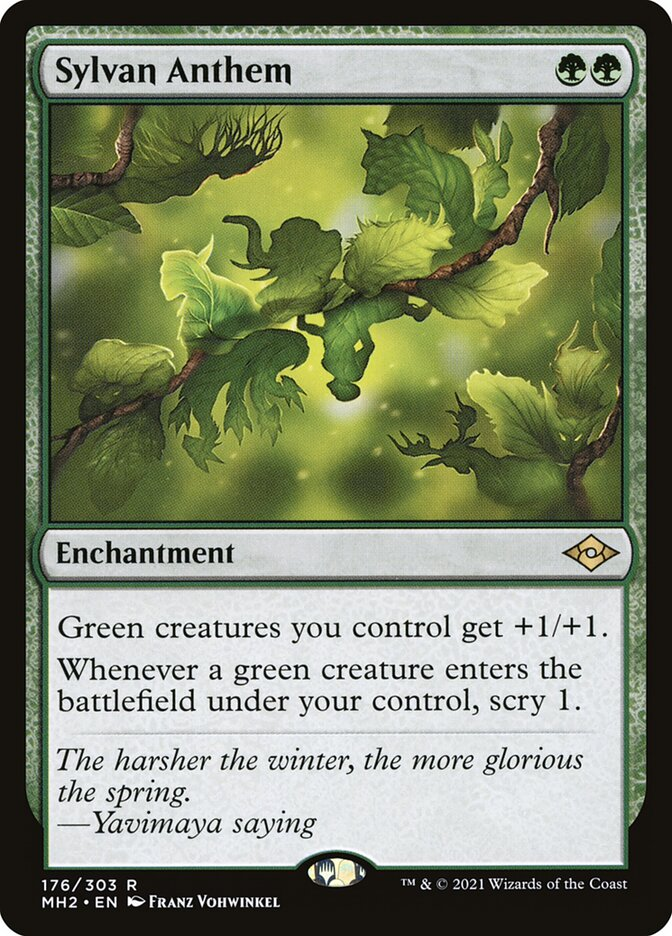

Alrighty, Enchantments are the next easiest card type to get your head around.
You cast them, they go onto the battlefield, and they do their thing. Easy!
However, now we get to learn why we played all those Lands earlier.
Unlike lands, you don't get to just willy nilly put them from your hand onto the battlefield once per turn. Enchantments (and everything else we're going to cover from here on out) has a Mana Cost.
Casting Spells
Much like our friend from earlier Fireball, Enchantments all have a cost associated with them.
You pay that cost with Mana, which you get from tapping lands.
Say for example, we were trying to play that Glorious Anthem. First we would check if we can. That is to say, it is our turn, and we are in our Main Phase (dw, I'll get to that)
Then we announce that we would like to cast it, then tap lands equal to its cost.
In this case, we would need 2 lands that make White mana and then one more mana of any color. So we could tap 3 Plains, or 2 Plains and a Forest. But not 3 Forests.
To play a card, announce you want to cast it, then pay mana equal to its Mana Cost by tapping your lands.Once you've done all that, congrats. You've successfully cast your spell. The Glorious Anthem goes onto the battlefield and does its thing. Super!
Aura
There is another type of Enchantment you'll need to know about. Auras.
Auras (like our friend Abundant Growth) are very similar to Enchantments, but they need some help staying on the battlefield. They do this by attaching to other cards.
Let's take our Abundant Growth, if we wanted to cast it, we would need to do all the steps from above but also choose where its going to go when it ends up on the battlefield.
Abundant Growth says that it must Enchant a Land. So we chose to put it onto say, the Forest we used to cast it and it grants its abilities to that card. Specifically "Enchanted Land has "T, Add one mana of any color."
Now if we were to reuse that Forest, in addition to tapping it for Green Mana, we could get White, or Black or Blue as well.
Enchantments get played and do what the card text says. Auras must be played enchanting specific permanents. But are otherwise identical.Next up..
Artifacts


Artifacts are very similar to Enchantments. You pay the cost, they head to the battlefield and they do what they say on the card. There are a few differences however.
Artifacts (usually) do not require any colors of mana to be cast. So you can use two Plains, or two Swamps, or a Forest and Mountain to cast your Talisman of Curiousity. Any combination of colors will work fine to cast your spell.
The other difference with Artifacts is, like Lands, they often require you to tap them to get their effect. Once a card is tapped, it will not untap until the start of your next turn, and therefore cannot be tapped a second time.
In the case of Chromatic Orrery, you then have to chose if you want the 5 mana or to pay mana to draw cards.
Hold on, whats that weird looking Diamond shape. That's new? I hear you ask.
That is what is known as colorless Mana. Similar to colored mana in every way except you cannot use it to pay those colored costs we saw earlier. There is also a small subset of cards that require that wingding of Mana as if it were colored mana. But those are an exception to the rule, not the rule itself.

We'll go over some edge cases and other strange exceptions in another article. Magic sure does have a lot of them. For now just note that the rules you're learning now will form a basis, and as a rule of thumb if a card contradicts these rules, the card takes precedent.
The more you play the better you'll get. This is just the basics.
Onto our next card type..
Creatures


Creatures add a layer of complexity to what we've learned to far.
If Lands are the bread and butter of magic, creatures are the gravy. So lets try and wrap our head around these complex new concepts.
Creatures, like the previous two card types we've looked at are cast, make their way onto the battlefield and then get to stick around. But with Creatures are special in that they allow us to attack our opponent, or block our opponents attacking creatures.
And now we get to learn about combat!
But before we do that, lets take a quick detour and learn about something we mentioned earlier. They parts of our turn.
Phases of a Turn
To keep this brief, all you'll need to know for now is that your turn is broken down into these steps.
Untap step
Upkeep step
Draw step
Main Phase
Combat
Main Phase
End Step
At the beginning of your turn you will untap all of your tapped permanents, all those sideways lands, artifacts and creatures. Turn those back upright
Upkeep, is when everything that says "At the beginning of your upkeep, do this" happens
Draw is where you draw a card.
Your Main Phase (both pre and post combat) is when you get to play your lands, cast your Enchantments, Artifacts, Planeswalkers, Creatures, Sorceries, all of your spells happen here.
The End step is the same as your Upkeep, cards that reference your end step all go off here.
And finally, combat!
Combat.
Combat
This is when you get to turn your creatures sideways and beat them into your opponents face.
Combat is when you get to try and win the game by reducing your opponents life total to zeroThere are a few more parts of combat we haven't quite covered yet and they work similar to the other parts of the turn.
Beginning of Combat (things that say at the beginning of combat happen here)
Declare Attackers (is when you choose which creatures you would like to attack with)
Declare Blockers (is when your opponent gets a chance to protect themselves with their creatures)
Combat Damage step (is when all creatures in combat will deal their damage)
End of Combat (things that happen at end of combat happen here)
Now, lets just focus on those middle 3, because they are the relevant part here.
Creatures are special as they have two numbers in the bottom right hand corner. Let's use this Hinterland Drake as our example

From left to right are the creatures power and toughness. Each creature deals damage equal to its power and can take damage equal to its toughness.
So with our Drake friend here. It would deal 2 damage to other creatures or players and is able to take 3 damage before needing to head off to the graveyard.
We now know about Combat and about creatures having both power and toughness. Lets take a quick walk through what a typical Combat step with look like. We'll face off our Hinterland Drake against one our opponents control.
First, we move from our Main Phase to combat.
At the beginning of combat we have nothing that needs to go off so we'll move right through that into our declare attackers step
During our declare attackers step we will choose to send our Hinterland Drake at our opponent. We do this by turning it sideways, and telling our opponent that they are being attacked. When you declare attackers, choose as many creatures as you control that are able to attack and declare them all as attackers simultaneously.
It's worth noting here that creatures are unable to attack if they are tapped, if some other card or effect is preventing them from attacking, or if they have summoning sickness (which is the shorthand way of saying that you cast them this turn)
Now we can move to our opponents Declare Blockers step. They don't want to take 2 damage, so they decide to block the Hinterland Drake with their own 2/3.
Much like attacking, all blocking is done simultaneously, and only untapped creatures can block. Unlike attacking, creatures do not need to tap when they block, and multiple creatures can block a singular attacking creature (known as a double block).
Once blocks are declared and locked in, damage can happen.
In the Combat Damage step, each attacking creature will deal damage to whatever is blocking it or the player its attacking. Subsequently, each blocking creature will deal damage to the creature it is blocking.
As a quick aside, there are some keywords on cards that will change up how combat works. If in doubt, a quick search will be able to explain what these keywords do. But as a quick summary.
Creatures with First Strike will deal their damage before creatures without First Strike
Creatures with Flying cannot be blocked except by creatures with Flying or Reach
Creatures with Haste can attack the turn they are played
Creatures with Vigilance do not need to tap to attack
Creatures with Trample deal any excess damage to the player they are attacking
Creatures with Lifelink will cause you to gain as much life as they deal damage
Creatures with Deathtouch will cause any amount of damage to be considered lethal by blocking creatures.
Again, for a more comprehensive list, I would recommend here
Now we know the basics of combat, let's circle our way back around to creatures.
Some of you may have noticed that Thalia, and for the super keen eyed, Chromatic Orrery have a sneaky supertype that says Legendary.
Legendary is a type of card, typically used by Creatures that gives it a special property
Typically Legendary permanents refer to in universe characters or places or objects that have some amount of story significance. They also impose a gameplay restriction.
As you summon creatures to fight your opponent, it would be a bit strange to see two identical copies of a named character standing in front of you. About as odd as having Will Smith and Will Smith showing up at your house for dinner. The Legend rule prevents this from happening.
The legend rule states that if you have 2 or more copies of a legendary card with the same name on the battlefield at the same time, you must pick one to keep and the others go to the graveyard.
Right. Got all that? Still following?
I hope so too, because now is where it gets a little complicated.
Everything we've learned so far has been relatively simple.
During your turn you can play one land, tap your lands to make mana, use that mana to play permanents (that's your enchantments, artifacts, creatures etc.) and then use those permanents to attack your opponent until one of you dies.
But what if you wanted to do things during your opponents turn? Is that allowed?
It is indeed. But to do so I have to teach you about the stack.
Instants and Sorceries
The Stack
Everything we've covered so far has been a permanent. You cast them. They go onto the battlefield and stay there until they die or are destroyed.
There are two other card types that are not permanents. Instants and Sorceries.
Hey look, Sorcery, that word sounds familiar. Now where've we seen that before..
Instants and Sorceries do what they say on the card, but rather than stick around on the battlefield. They do it on the stack, then they find their way to the graveyard.
The stack is kind of like a big tower of cards that are placed into the stack and wait around until they get to do their thing. Which is usually pretty simple.
You play your Fireball, everyone says its good to go then it fires off.
The same is true for your creatures and enchantments, all of your spells have done this when you cast them. The reason we do this is so we can do stuff on other peoples turn. One fancy card type Instants.


Instants can be played any time you could want to play them. Your turn? Sure. An opponents turn? Sure. During the middle of combat? Yep! At the end of your opponents draw step? Absolutely.
Everything else we've cast so far, that's been during the Main Phase on your turn with nothing on the stack. Instants (and cards with the keyword Flash, as well as Activated Abilities) can be used with no such restriction, even when there is already something on the stack. Hence the name.
Lets go through an example. Say you had a Hinterland Drake out on the battlefield, attacking, like before. Instead of blocking lets imagine your opponent wanted to kill it with fiery lightning instead and decided to cast a Lightning Bolt.
Its an Instant, so your opponent is more than welcome to cast it in your combat, they pay their red mana and put it onto the stack.
Now, you don't want your Drake dying to the 3 damage and happen to be holding onto a Giant Growth. While that Lightning Bolt is on the stack you can respond and give your Hinterland Drake an additional 3 power and 3 toughness (the +3/+3)
The stack starts to resolve from top down, or Last In First Out. Your Giant Growth grows the Drake to a 5/6, the Lightning Bolt then deals 3 damage to it and the Hinterland Drake survives, dealing 5 damage to your opponent, making them sad and 5 damage closer to losing. Hooray!
Sorceries on the other hand are very similar to Instants except they are slower. Having to be cast during your Main Phase and only when the stack is empty. Some examples are:


Before we move onto our final card type. I'll take the time to mention some tips for making your first deck.
As a rule of thumb, you want to include in a 60 card deck, around 24-27 lands, 16-20 creatures, 10-12 instants and sorceries and a handful of artifacts, enchantments and planeswalkers that support the theme of the deck.
Traditionally creatures will be your main source of damage, and as you only play one land a turn, creatures that cost 2, 3 or 4 will likely be the ones that will be winning you the game.
So a good deck should be able to develop a board by turn 5 or 6 that will be attacking your opponent down. With a comfortable amount of removal to back it up, and some relevant support in the form of enchantments (like our friend Glorious Anthem)
Now it's time for our final card type.
Planeswalkers


Planeswalkers are probably the most visually distinct element of Magic the Gathering.
These are powerful beings that walk the multiverse visiting the various landscapes and locations there are to visit. They are all inherently Legendary and come with a few quirks which this section will cover
Each Planeswalker enters the battlefield with a number of loyalty counters denoted by the bottom right corner. Once during the main phase on each of your turns you may activate one ability of each planeswalker you control by paying the cost next to the corresponding ability.
You pay these costs by either adding or subtracting an amount of loyalty each to the number beside it. Once you pay the cost, the ability will go on the stack, resolve and give you a boon.
The other quirk of Planeswalkers is that they can be attacked the same as players. When they are dealt damage, you remove that much loyalty from them and if they have none left or hit 0 loyalty they will go off to the graveyard.
Notably, some Planeswalkers have a static ability always in effect, this will be an ability with no loyalty cost associated with it.
Okay! That is most of what you'll need to know to get started in a game of Magic the Gathering. Follow the blog for some upcoming tips and tricks. I hope you enjoyed the article. Thanks for reading, signing off
James
Comments